New Construction Bathroom Upgrades in Queen Creek, AZ: What to Upgrade First
Buying a new home in Queen Creek doesn't necessarily mean the bathroom is finished exactly the way you want it.
Production-built homes are designed around standardized layouts, materials, and price points. The bathroom may be completely functional on move-in day, but homeowners often discover after living in the house that the vanity is too small, the shower feels generic, storage is limited, or the finishes don't match their preferences.
For homeowners in Queen Creek, San Tan Valley, and surrounding East Valley communities, remodeling a newer bathroom can be less about fixing problems and more about making the space work better for the way your household actually lives.
The key is knowing which upgrades provide the biggest improvement before spending money on cosmetic details.
What Is a Builder-Grade Bathroom?
Builder-grade simply refers to standard materials and fixtures selected by a production builder for efficiency, availability, and cost control.
That doesn't mean the bathroom is poorly constructed. It means the design is generally intended to appeal to a wide range of homeowners rather than being customized for one household.
Common builder-grade bathroom features include:
- Standard-size vanity cabinets
- Basic laminate or entry-level stone countertops
- Fiberglass or acrylic tub-shower combinations
- Limited cabinet storage
- Standard mirrors and lighting
- Basic plumbing fixtures
- Small-format or builder-selected tile
- Standard shower doors or curtains
These finishes may work perfectly well when you first move in. After a few months of daily use, however, you may discover that the room doesn't provide the storage, counter space, shower configuration, or visual style you actually want.
That's where targeted bathroom upgrades can make sense.
1. Upgrade a Single Vanity to a Double Vanity
For couples and families sharing a bathroom, the vanity is often the first place where a builder-grade design becomes inconvenient.
A single sink can create a bottleneck when two people need to get ready at the same time.
A double vanity provides:
- Two separate sinks
- More counter space
- Individual storage areas
- Better organization
- Easier morning routines
Before converting to a double vanity, make sure the existing room has enough width and clearance. In some bathrooms, keeping a single larger vanity may provide a better result than squeezing two sinks into a limited space.
The important point is to design the vanity around how the bathroom is actually used rather than simply adding a second sink because it is considered an upgrade.
2. Replace the Builder-Grade Tub With a Walk-In Shower
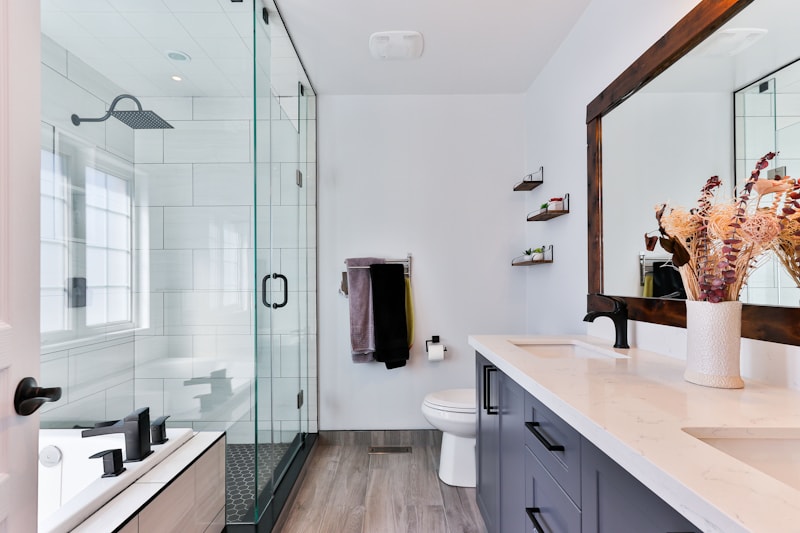
One of the biggest visual changes you can make in a newer bathroom is replacing a standard tub-shower combination with a custom walk-in shower.
This can be particularly useful when the tub is rarely used.
A redesigned shower can include:
- A low-threshold or curbless entry
- Large-format porcelain tile
- Built-in shower niches
- Handheld showerheads
- Multiple shower fixtures
- Shower seating
- Frameless glass
- Slip-resistant flooring
A tub-to-shower conversion can also make the room feel more open because the finished shower can be designed around the existing footprint rather than around the standard appearance of a builder-installed tub.
For more information, see our walk-in shower and shower remodeling services.
3. Upgrade the Shower Waterproofing System
A beautiful shower isn't just about the tile you can see.
The waterproofing behind the finished surface is one of the most important parts of the shower assembly.
When upgrading a builder-grade shower, ask what waterproofing system will be used rather than assuming that new tile automatically means a completely new waterproof shower.
Important areas include:
- Shower walls
- Corners and seams
- Shower niches
- Bench areas
- Shower floor
- Drain connection
- Transitions between different materials
A properly installed waterproofing system helps protect the wall and floor assembly from moisture intrusion.
If you're considering a custom shower, you can also read our guide to Schluter-KERDI waterproofing before choosing a remodeling approach.
4. Upgrade the Countertop to Quartz
The countertop is another relatively simple change that can make a standard bathroom feel substantially more customized.
Quartz is a popular choice for bathroom vanities because it offers a wide range of colors and patterns while requiring less routine maintenance than many natural-stone surfaces.
Popular choices include:
- White quartz
- Warm neutral patterns
- Marble-look quartz
- Subtle gray veining
- Solid-color contemporary finishes
The countertop should coordinate with the vanity, flooring, shower tile, and fixtures rather than being selected independently.
For a newer home, replacing the countertop while keeping otherwise usable cabinetry can also be a way to improve the appearance without replacing every component.
5. Improve Bathroom Storage
Storage is often overlooked when a new home is being built because it isn't necessarily the most noticeable feature during a walkthrough.
After living in the home, however, limited storage can become one of the biggest daily frustrations.
Consider adding:
Larger Vanity Drawers
Deep drawers can make everyday toiletries easier to organize than traditional cabinet doors.
Linen Storage
A tall linen cabinet can provide dedicated space for towels, toilet paper, and extra bathroom supplies.
Shower Niches
A built-in niche keeps shampoo and soap off the shower floor and reduces visual clutter.
Medicine Cabinet Storage
A recessed medicine cabinet can provide additional storage without significantly reducing usable floor space.
Towel Storage
Dedicated hooks, shelves, or towel bars can keep towels organized and prevent them from ending up on counters or floors.
A good storage plan should be based on what your household actually needs to store.
6. Upgrade Builder-Grade Flooring
Flooring can dramatically change the appearance of a bathroom without requiring a major layout modification.
Large-format porcelain tile is one option homeowners often consider because it provides a cleaner visual appearance with fewer grout joints.
Other options include:
- Wood-look porcelain
- Stone-look porcelain
- Concrete-look tile
- Natural stone
- Textured porcelain
- Neutral geometric patterns
For a family bathroom, durability and maintenance should be considered alongside appearance.
In particular, choose a surface appropriate for wet areas and make sure the tile's slip characteristics fit the intended application.
7. Replace Basic Mirrors and Lighting
You don't always need to change the entire bathroom to make it feel more customized.
Mirrors and lighting can have an outsized effect on the finished appearance.
Instead of a basic builder-installed mirror, consider:
- Framed mirrors
- Large rectangular mirrors
- Rounded mirrors
- Recessed medicine cabinets
- Backlit mirrors
Lighting can also be layered around different activities.
For example:
Vanity lighting provides even illumination for grooming.
Ceiling lighting provides general room illumination.
Shower lighting improves visibility in the wet area when properly specified for that location.
A lighting upgrade is especially useful when the original bathroom feels dark despite having otherwise attractive finishes.
8. Upgrade the Plumbing Fixtures
Another relatively straightforward improvement is replacing standard plumbing fixtures with finishes and models that better match your design.
Depending on the bathroom, you might upgrade:
- Faucets
- Showerheads
- Hand showers
- Tub fillers
- Shower valves
- Sink fixtures
Popular finish choices include brushed nickel, matte black, chrome, and warm metallic tones.
Try to keep the finish consistent throughout the bathroom. Mixing finishes can work in some designs, but it should look intentional rather than accidental.
9. Consider a Frameless Glass Shower Enclosure
If you're replacing a builder tub or shower enclosure, glass can significantly change the appearance of the room.
A frameless enclosure provides a cleaner visual transition between the shower and the rest of the bathroom.
It can also help a smaller bathroom feel more open because there is less visual separation than with an opaque shower surround.
The enclosure should be measured after the finished shower dimensions are established so the glass fits the actual opening correctly.
10. Choose Materials That Make Sense for Arizona Homes
Queen Creek bathrooms are exposed to the same broader desert climate conditions found throughout the East Valley.
That makes material selection important.
For a frequently used bathroom, consider materials that are:
- Durable
- Easy to maintain
- Appropriate for wet environments
- Resistant to everyday staining
- Easy to clean
Large-format porcelain, quartz countertops, quality cabinetry, and properly installed waterproofing can create a combination that balances appearance with practical maintenance.
The goal isn't to choose the most expensive material available. It's to choose materials that fit your budget and how frequently the bathroom will be used.
11. Don't Ignore Ventilation
A bathroom renovation is a good opportunity to evaluate ventilation.
Bathrooms generate significant moisture through showers, baths, and normal daily use. Without adequate ventilation, humidity can linger on walls, ceilings, cabinetry, and other surfaces.
During an upgrade, ask:
- Is the exhaust fan properly sized?
- Does it vent to the exterior?
- Is the existing ductwork adequate?
- Is the fan noisy enough that family members avoid using it?
- Does the room remain humid long after a shower?
Improving ventilation may not be the most visually exciting upgrade, but it can be one of the more practical improvements you make.
12. Add Accessibility Features Before You Need Them
A newer bathroom can also be an opportunity to plan for future use.
You don't have to turn a family bathroom into an accessibility-focused space today. Instead, consider making small structural preparations that could help later.
For example:
- Add blocking behind shower walls for future grab bars
- Consider a lower-threshold shower
- Use appropriately slip-resistant flooring
- Install a handheld showerhead
- Maintain comfortable clearances
- Choose controls that are easy to reach
Planning these details while the walls are open is generally easier than trying to add them later.
Should You Remodel a Bathroom That Is Only a Few Years Old?
This depends on what you're trying to accomplish.
A newer bathroom may not need a complete gut renovation.
If the plumbing, electrical system, cabinetry, and layout are all suitable, you may be able to concentrate on selected upgrades instead.
For example:
Cosmetic upgrade:
- Paint
- Mirror
- Lighting
- Hardware
- Fixtures
Mid-level upgrade:
- Vanity
- Countertop
- Flooring
- Shower surround
- Fixtures
Major renovation:
- Tub-to-shower conversion
- Custom waterproofed shower
- New vanity
- New flooring
- Plumbing changes
- Electrical changes
- New lighting
- New tile throughout
Choosing the appropriate scope can prevent you from spending money replacing components that are still performing well.
Do New Construction Bathrooms Need Permits for Remodeling?
It depends on the work being performed.
Cosmetic changes that don't alter regulated systems may not require the same permitting as work involving plumbing, electrical, structural changes, or other modifications.
Before construction begins, determine whether your specific project requires approval from the applicable local authority.
If plumbing, electrical, structural, or other regulated work is involved, your contractor should identify the applicable requirements and explain how permitting and inspections will be handled.
HOA requirements, if applicable, are a separate issue from municipal permits.
When Is the Best Time to Upgrade a New Bathroom?
There isn't a single correct answer.
Some homeowners remodel immediately because they already know the builder's finishes don't suit their needs. Others wait several months so they can understand how the bathroom actually functions.
Waiting can be useful because you discover:
- Where storage is insufficient
- Whether the vanity is too small
- Which fixtures you actually use
- Whether the tub is unnecessary
- How lighting performs at different times of day
- Whether the existing ventilation is adequate
On the other hand, remodeling sooner can make sense if you already know what you want and want to avoid living with an inconvenient layout for years.
The best time is generally when the upgrade provides enough practical or aesthetic value to justify the investment.
New Construction Bathroom Upgrade Checklist
Before hiring a remodeling company, review the following:
- Does the current vanity provide enough counter space?
- Would a double vanity improve the bathroom?
- Is the tub actually being used?
- Would a walk-in shower better suit the household?
- Is the shower properly waterproofed?
- Is there enough bathroom storage?
- Are the existing countertops durable and easy to maintain?
- Is the flooring appropriate for a wet environment?
- Is the lighting sufficient?
- Does the exhaust fan adequately remove moisture?
- Would upgraded plumbing fixtures improve functionality?
- Could accessibility features be useful later?
- Does the proposed work require permits?
- Is HOA approval required?
Answering these questions before selecting materials can help you prioritize the upgrades that will make the biggest difference.
Frequently Asked Questions
Is it worth upgrading a builder-grade bathroom in a new Queen Creek home?
It can be worthwhile when the existing bathroom doesn't fit your household's needs. Common reasons include insufficient storage, a single vanity shared by multiple people, an unused tub, basic finishes, or a shower configuration you don't like.
What are the best bathroom upgrades for a new construction home?
The best upgrades depend on the existing bathroom. Double vanities, custom walk-in showers, quartz countertops, improved storage, better lighting, upgraded flooring, and modern plumbing fixtures are common options.
Should I replace a builder-grade shower?
If the shower is functional but doesn't meet your needs or design preferences, upgrading it can make a significant difference. A remodel can replace a basic surround with a custom tile shower, improved storage, upgraded fixtures, and a professionally installed waterproofing system.
Can I convert a new construction tub into a walk-in shower?
In many cases, yes. A tub-to-shower conversion can replace an underused tub with a walk-in shower designed around the existing bathroom footprint. The specific feasibility depends on the existing plumbing, framing, floor configuration, and desired shower design.
Do bathroom upgrades in Queen Creek require permits?
Some projects may not require permits, while plumbing, electrical, structural, and other regulated changes may. The exact requirement depends on the scope of work and applicable local regulations. Your remodeling contractor should review the project before construction begins.
How long does a bathroom upgrade take?
The timeline depends on the scope. Replacing selected finishes can be considerably faster than a complete bathroom renovation involving demolition, plumbing changes, waterproofing, custom tile, cabinetry, and glass.
Should I remodel immediately after buying a new home?
There's no requirement to remodel immediately. Some homeowners prefer to live in the home first and identify what doesn't work. Others already know which builder-grade features they want to replace and prefer to complete the upgrades early.
Upgrade the Bathroom to Fit Your Home — Not the Builder's Template
A new Queen Creek home gives you a clean starting point, but the bathroom doesn't have to remain exactly as the builder delivered it.
The most valuable upgrades aren't necessarily the most expensive ones. A better vanity can improve busy mornings. Additional storage can eliminate clutter. A properly designed walk-in shower can make the room more comfortable. Better lighting and durable finishes can make the space feel more personal without requiring a complete renovation.
If you're planning upgrades for a newer home, start by identifying the features that interfere with your daily routine and prioritize those before choosing decorative finishes.
ARZ Home Remodeling provides bathroom remodeling services for homeowners in Queen Creek and surrounding East Valley communities. Explore our Queen Creek bathroom remodeling services, learn more about bathroom remodeling services, or browse our bathroom remodeling blog for additional remodeling guides.
Call (520) 569-3339 to discuss your bathroom upgrade and schedule an in-home consultation.